Showing posts with label in progress. Show all posts

Thursday, July 22, 2010

Applied Physiology in Rugby Union: Match Analysis and Training Load Management

Research Spotlight - in progress

Dean Higham
PhD candidate

Supervisors: Judith Anson, David Pyne1 and Anthony Eddy2
1. The Australian Institute of Sport, 2. Australian Rugby Union

Abstract: The research program, incorporating a series of progressive research studies, will address the physical preparation and training load management of rugby union players competing at the highest level of domestic and international competition. The research aims to validate novel methods of analysis of rugby union match and training performance and to identify strategies to optimise training efficiency and effectiveness in producing favourable performance outcomes. Initial investigations will characterise rugby sevens match demands of domestic and international tournaments. Observational and controlled experimental research studies of rugby training will quantify the physical and physiological demands of common training drills and identify strategies designed to direct the specificity of players’ responses to training. By distinguishing training drills related to particular aspects of physiological and tactical competition demands, coaches may more appropriately prescribe training programs that maximise performance outcomes. The outcomes of the research plan will provide the basis for ongoing athlete monitoring within Australian Institute of Sport and Australian Rugby Union sport programs.

Image is London Sevens winning photo by IRB/Martin Seras Lima.

Monday, July 12, 2010

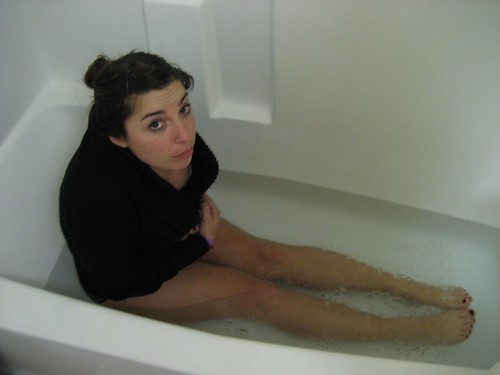
Cryotherapy use on recovery from, and adaptation to, muscle damage - a repeat bout modulator

Research Spotlight - in progress

Ben Rattray, Kate Pumpa
and Nick Ball
Staff

Abstract: The aim of this study is to examine the effect of ice therapy on recovery from muscle damage and subsequent adaptation to a second bout of exercise. Athletic training and exercise health interventions aim to generate changes that improve performance or health outcomes. Training aims to optimise adaptation and a balance between training stimulus and recovery must be met. Local cold pack application can decrease inflammation, aiding recovery, but its use long-term may interfere in the positive adaptations from training. This study will investigate the effects of a series of local cold pack applications (cryotherapy) on muscle performance before and after eccentric exercise.

Plain English: It is unclear if the act of putting ice on a muscle after exercise improves or obstructs adaptations to exercise. This study will measure muscle performance before and after training with and without regular ice treatment. The training used in the study will be exercise that the participants are unaccustomed to, creating some muscle soreness. The outcomes of the study are likely to influence recommendations for exercise recovery.

Image is ice bath by g. rox

Friday, July 9, 2010

Power Development and Monitoring during Growth and Maturation in Elite Athletes

Research Spotlight - in progress

Ian McKeown
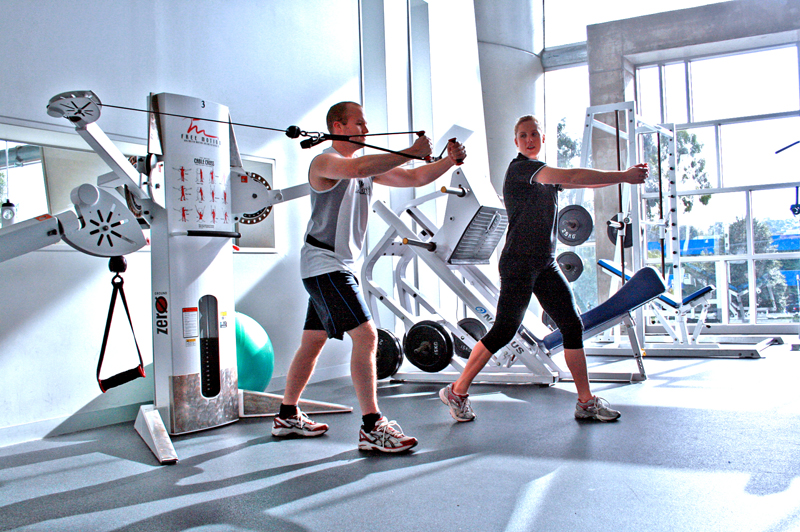
Personal Training at a Gym - Cable Crossover
by LocalFitness
PhD candidate

Supervisors: Nick Ball, Julian Jones and Philip Moreland

Abstract:
Aim: This is a 2-year linked-longitudinal study. The aim of the research is to explore the implications of maturation and growth on power production and development of elite athletes.
Subjects: Athletes from the Australian Institute of Sport and ACT Academy of Sport.
Methods: Measurements of growth and maturation will be monitored regularly alongside markers of athletic performance such as jump profiling and sport specific testing.
Results: Results will be reported back to the coach of each athlete, indicating the stage of growth and maturation of that athlete at that particular time and the most appropriate training that each athlete should focus on in training at the present and in the next phase of training. This information will produce physically better athletes for their particular sport and lead to a deeper understanding of athlete development during maturation and growth.

Tuesday, June 29, 2010

The effect of short-term eccentric exercise training on inflammation and glucose tolerance in early stage type 2 diabetics

Research Spotlight - in progress


Ben Rattray, Walter Abhayaratna*, Gordon Waddington, Tegan Meredith*, Nick Ball and Vicki Deakin
Insulin pump with infusion pump
Staff  *The Canberra Hospital

Background: In Australia, physical inactivity is attributable to ~$400m per year in direct health care costs, although the indirect costs on society are estimated to be much higher. Physical inactivity can lead to a state of low-grade inflammation associated with many disease states including diabetes. Exercise can reverse this trend and both acute and chronic moderate exercise can reduce systemic inflammation. Specifically relating to metabolic disease states, exercise is known to ameliorate insulin resistance and glucose tolerance. However, compliance remains a major issue in physical activity yielding the health benefit gained from any exercise increasingly important.

Physical activity targeting muscle adaptation is desirable for metabolic disease states such as diabetes because skeletal muscle strongly regulates blood glucose and fat metabolism. At the cellular level eccentric exercise greatly increases stress on the muscle relative to concentric exercise at a lower metabolic and cardiovascular cost. Eccentric exercise thus offers the advantage of limiting many of the risks associated with exercise in at risk populations (i.e. increases in HR and BP) and thus better suited to address complex chronic diseases. A single bout of eccentric exercise can create a state of inflammation and transiently impair insulin-signalling pathways but this negative response is prevented during a second exercise bout. Several positive cellular adaptations can occur after less than a week of eccentric training. These observations suggest a much greater stimulus for adaptation than typically observed during concentric exercise.

Recent research investigating the effect of eccentric exercise training in impaired glucose tolerance has been poorly controlled. Downhill hiking prescribed over two months however has been shown to reduce systemic inflammation markers and may improve insulin resistance in apparently healthy individuals although no direct measure of insulin resistance was carried out. The proposed research will address this gap in the literature.

Plain English: Exercise forms an important part of the treatment of type 2 diabetes. Specific recommendations on the type of exercise that should be performed are less clear. Issues relating to exercise prescription include potential complications of exercise and compliance to an exercise program. Eccentric contractions occur during exercise when the muscle is lengthening, such as during weight training or walking down stairs or downhill. This can result in some initial muscle soreness but research suggests that eccentric exercise may provide a strong stimulus for positive adaptations to the muscle, resulting in improved glucose control and health outcomes. It is also thought that the improvements experienced during this type of exercise will be greater than those of other types of exercise at a similar heart rate level. Greater health benefits may be gained from less physical activity, promoting increased compliance to exercise programs. This project will assess how your glucose control and markers of inflammation respond to a two week bout of either concentric of eccentric cycle training.

Links: Blog post, in the news blog post, another in the news blog post.

Friday, June 25, 2010

The impact of varied physical load on an executive function task


Research Spotlight - in progress

Ben Rattray, Disa Smee and James Neill
Staff

Abstract: Exercise tends to facilitate cognitive performance although there are a number of caveats to this phenomenon. Higher levels of cognitive function appear influenced by the length, intensity and perhaps type of exercise. Interactions generally accepted to interfere in peripheral exercise physiology including heat, altitude and access to fuel can also have profound influence on cognition. Studies of the interaction between acute exercise and cognition tend to focus on constant load or incremental exercise last only a few minutes. These protocols replicate the demands of few (if any) true life sporting or occupational demands that typically involve periods of high and low intensities. It has been proposed that a cognitive reserve exists and that cognitive performance will not deteriorate until the amount of resources is insufficient to deal with both physical and cognitive tasks. It is intuitive that, if this is the case, the reserve will not be challenged until conditions are considerably taxing. This study’s primary aim is to evaluate the impact of varied physical workload on in executive function and a range of physiological correlates.

Plain English: Mental, or cognitive performance, is often improved during steady moderate exercise. Decision making however is often conducted under conditions in which the physical requirements are varied and heavy (e.g., sporting setting, emergency services and military operations). There is some evidence to suggest that heavy exercise, temporarily impairs cognitive performance, but it is unknown how changes in physical load will impact on decision making. The outcomes of the study are likely to influence physical preparation and strategies aimed at limiting any deterioration in cognitive performance during physically stressful conditions in both sporting and occupational settings.

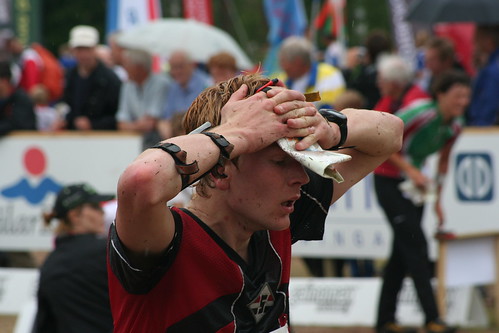
Image is Oringen 458 by Ultimate-Orienteering.

Monday, June 21, 2010

The effect of controlled frequency breathing on the physiology and stroke characteristics of elite swimmers

Research Spotlight - in progress

Courtney McGowan
Bachelor of Sport Studies (Honours) student

Supervisors: Ben Rattray and Keith Lyons

Abstract: The use of controlled frequency breathing (CFB) or 'hypoxic' breathing is a common training method used by competitive swimmers. CFB is not simply breath holding; it involves the swimmer restricting voluntarily the frequency of their breathing for a set number of strokes. The reduction in frequency of breathing has implications for both the physiological and mechanical components of swimming performance. Physiologically, a reduction in breathing frequency can induce a state of hypoxia, and subsequently an increase in blood lactate. This added physiological stress on the swimmer may simulate that experienced during competition. Mechanically, changes in breathing pattern may contribute also to improvements in stroke coordination/mechanics and subsequent performance. This study will examine the effects of CFB on a swimmer's physiological responses, stroke mechanics and performance under conditions of maximum effort. Stroke characteristics such as stroke rate and stroke length, and the physiological parameters of blood lactate, pH, gas concentrations, and heart rate and performance times will be monitored and analysed. It is anticipated that the outcomes of this research will allow for an improvement in the understanding of elite swimmers' responses to CFB and how CFB could be used in elite training programs and competitive racing to improve performance.

Plain English: A variety of different training methods are employed by those who coach elite swimming; however a method that has been utilised continuously over the past few decades and recently has gained more support is controlled frequency breathing (CFB) or 'hypoxic' breathing. This method involves the swimmer restricting the number of breaths from their normal breathing pattern of 1 breath every 2 or 3 strokes to a pattern of 1 breath every 5+ strokes. In theory, CFB limits the air exchange in the lungs, therefore reducing the oxygen concentrations in pulmonary circulation and decreasing the oxygen supply to working skeletal muscles. This study will examine the physiological and stroke mechanic responses to the use of this training method. The characteristics of stroke rate and stroke length along with the blood based parameters of lactate, heart rate, pH and gas concentrations and performance times will be analysed. As this method is used commonly in training with the belief that it will elicit an improvement in performance, the primary focus of the report will be to demonstrate the positive and negative effects of the method on athletic achievements.
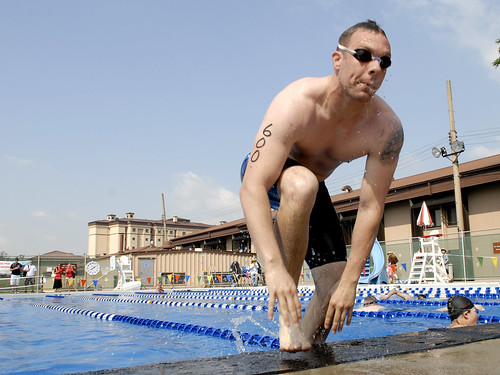
Image is Cold Steel Triathlon by UNC - CFC - USFK.

--
Posted By Ben Rattray to UCNISS at 6/22/2010 02:03:00 PM