Showing posts with label Smee. Show all posts

Monday, July 12, 2010

Cryotherapy use on recovery from, and adaptation to, muscle damage - a repeat bout modulator

Research Spotlight - in progress

Ben Rattray, Kate Pumpa
and Nick Ball
Staff

Abstract: The aim of this study is to examine the effect of ice therapy on recovery from muscle damage and subsequent adaptation to a second bout of exercise. Athletic training and exercise health interventions aim to generate changes that improve performance or health outcomes. Training aims to optimise adaptation and a balance between training stimulus and recovery must be met. Local cold pack application can decrease inflammation, aiding recovery, but its use long-term may interfere in the positive adaptations from training. This study will investigate the effects of a series of local cold pack applications (cryotherapy) on muscle performance before and after eccentric exercise.

Plain English: It is unclear if the act of putting ice on a muscle after exercise improves or obstructs adaptations to exercise. This study will measure muscle performance before and after training with and without regular ice treatment. The training used in the study will be exercise that the participants are unaccustomed to, creating some muscle soreness. The outcomes of the study are likely to influence recommendations for exercise recovery.

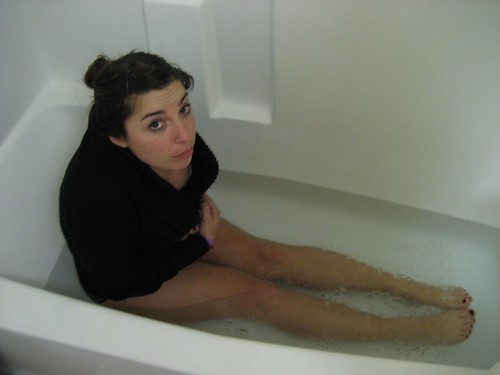
Image is ice bath by g. rox

Friday, June 25, 2010

The impact of varied physical load on an executive function task


Research Spotlight - in progress

Ben Rattray, Disa Smee and James Neill
Staff

Abstract: Exercise tends to facilitate cognitive performance although there are a number of caveats to this phenomenon. Higher levels of cognitive function appear influenced by the length, intensity and perhaps type of exercise. Interactions generally accepted to interfere in peripheral exercise physiology including heat, altitude and access to fuel can also have profound influence on cognition. Studies of the interaction between acute exercise and cognition tend to focus on constant load or incremental exercise last only a few minutes. These protocols replicate the demands of few (if any) true life sporting or occupational demands that typically involve periods of high and low intensities. It has been proposed that a cognitive reserve exists and that cognitive performance will not deteriorate until the amount of resources is insufficient to deal with both physical and cognitive tasks. It is intuitive that, if this is the case, the reserve will not be challenged until conditions are considerably taxing. This study’s primary aim is to evaluate the impact of varied physical workload on in executive function and a range of physiological correlates.

Plain English: Mental, or cognitive performance, is often improved during steady moderate exercise. Decision making however is often conducted under conditions in which the physical requirements are varied and heavy (e.g., sporting setting, emergency services and military operations). There is some evidence to suggest that heavy exercise, temporarily impairs cognitive performance, but it is unknown how changes in physical load will impact on decision making. The outcomes of the study are likely to influence physical preparation and strategies aimed at limiting any deterioration in cognitive performance during physically stressful conditions in both sporting and occupational settings.

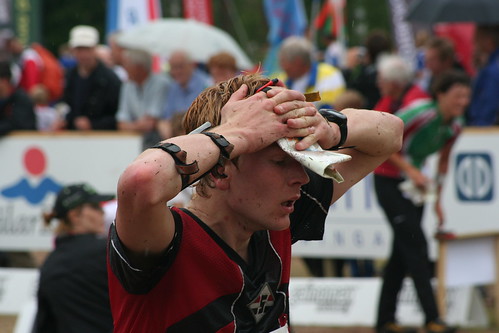
Image is Oringen 458 by Ultimate-Orienteering.